

How much does custom embroidery cost? Stitch count, digitizing and quantity
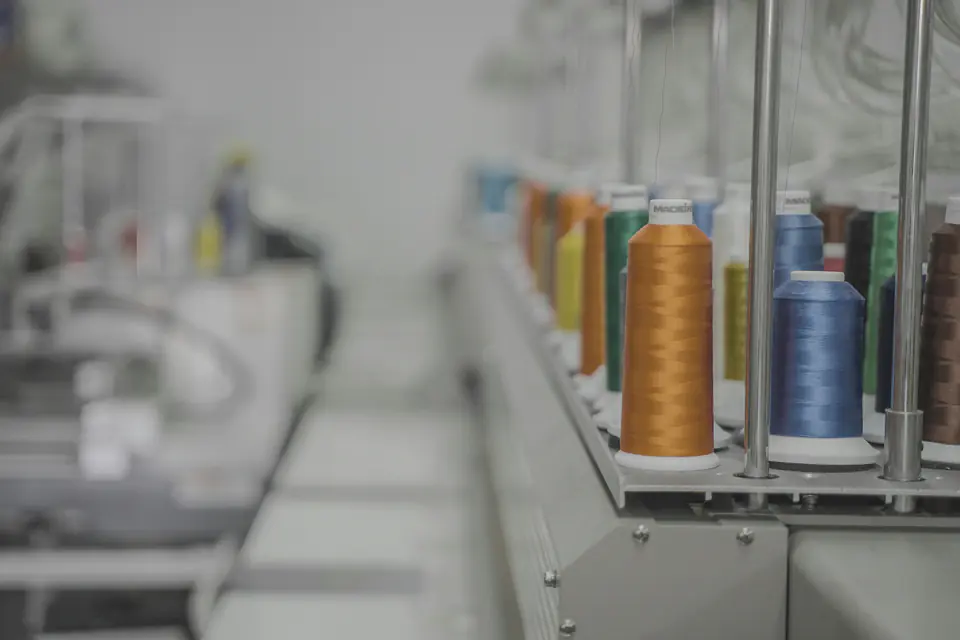
Embroidery prices look opaque until you see how they're built. Almost every quote, from a home embroiderer or a ten-head shop, comes down to four parts: the stitches, the digitizing, the item, and how many you want.
1. The stitches
Most embroiderers price by the 1,000 stitches, because stitch count tracks machine time and thread. Z Digitizing's pricing guide puts a typical rate at around $1 to $3 per 1,000 stitches, with high-volume work sometimes lower (Z Digitizing).
How many stitches is a design? It depends on size and how much of it is filled. ASI's worked example puts a solid 2 x 2 inch fill at about 5,648 to 6,917 stitches, depending on density (ASI). An outline or simple lettering at the same size uses a fraction of that.
So a design of 8,000 stitches at $2 per 1,000 is $16 of stitching per piece, the same worked example Z Digitizing uses.
2. Digitizing
A machine can't sew a PNG. Someone has to convert the artwork into a stitch file: stitch types, direction, density, order. That's digitizing, and it's charged once per design, commonly $10 to $75, with complex jacket backs at $65 to $150 or more (same source).
On one item, that fee is most of the bill. On 50 items, it nearly disappears. Z Digitizing's example: a $30 digitizing fee spread across 100 shirts adds $0.30 a shirt.
3. The item
If the maker supplies the blank (cap, polo, tote), that's on the bill too. Structured caps and heavy jackets are slower to hoop and sew; the same guide lists surcharges of about $1 to $2.50 for structured caps and $2 to $4 for heavy jackets. Sending your own item saves the blank but may carry a handling fee.
4. Quantity and deadline
Many shops discount by quantity tiers. The example tiers in Z Digitizing's guide are full price for 1 to 11 pieces, 15% off at 12 to 47 and 30% off at 48 to 143. A deadline inside 24 to 48 hours typically adds 25% to 50% to the total.
Putting it together
| Order | What dominates the price |
|---|---|
| 1 patch or 1 cap | Digitizing and setup |
| 6–11 shirts, left chest | Digitizing, then stitches and blanks |
| 24 caps | Stitches and blanks, with a tier discount |
| 1 jacket back | Digitizing and a high stitch count |
Two habits cut the bill on small orders. First, keep the design simple: outlines and open fills sew faster than solid blocks. Second, ask for the stitch file when you pay for digitizing, so a reorder doesn't pay for it twice.
Why embroidery has setup fees (and how to make them hurt less)
Ask for one embroidered cap and the quote can look high next to the per-piece price on a 48-cap order. That's not a penalty for ordering small. It's the work that happens before the first real stitch, and it's the same whether you order one or a hundred.
What happens before the machine runs
Digitizing. Your artwork is converted into a stitch file. It's charged once per design, commonly $10 to $75, more for large or complex jacket backs (Z Digitizing).
Threading the colors. Each thread color in the design is loaded onto the machine. On a single-needle machine, every color change means rethreading by hand.
Hooping and stabilizer. The maker chooses a stabilizer for the fabric, hoops the item tight and squares it up. Caps need a cap frame or cap hoop; bags and finished garments can be awkward.
Test sew-out. Most makers stitch a sample on scrap fabric first to check density, colors and small lettering before touching your item.
The same Z Digitizing guide estimates that machine setup, with color changes and hooping, takes about 30 to 45 minutes. Some shops show that as a setup fee; others fold it into the per-piece price. Either way, someone pays for that time.
Why it matters most on small orders
On 48 pieces, half an hour of setup is a small slice per item. On one piece, it's the whole slice. Add digitizing and a single item can carry most of the order's cost on its own.
How to make setup fees hurt less
- Order a few at once. Five caps from one setup are cheaper per cap than five separate orders.
- Use fewer thread colors. Fewer changes, faster setup and run.
- Keep the file. Ask for the stitch file with your digitizing. Reorders skip the biggest one-time charge.
- Reuse the same size. A logo resized a lot may need re-digitizing; keep a cap size and a chest size.
- Supply a clean vector. Clear artwork is quicker to digitize than a blurry screenshot.
- Give a real deadline. Rush jobs inside 24 to 48 hours typically add 25% to 50% to the total, according to the same guide.
See the split
The free run time calculator shows how much of a job is sewing and how much is color changes and hooping. To compare real quotes, post your job once. Embroiderers state whether setup and digitizing are included, and the payment is protected until you confirm delivery.
How many stitches is my logo? A quick way to estimate
Stitch count is the number most embroidery quotes are built on, so it helps to know roughly where your logo lands before you ask. You can get close with a ruler and an honest look at the design.
Start from solid fill
ASI published a useful reference: a 2 x 2 inch area of fill stitches comes out at about 6,917 stitches at a dense 63.5 stitches per inch, 6,188 at 50 and 5,648 at 40 (ASI). Divide by the 4 square inches and solid fill runs roughly 1,400 to 1,700 stitches per square inch.
That's the ceiling. Very few logos are solid rectangles.
Then ask how much is filled
Look at your logo inside its bounding box and estimate how much of the box is actually stitched:
| Style | Rough share of the box stitched |
|---|---|
| Outline or text only | Small, perhaps 10–20% |
| Light fill: a mark with some solid shapes | About a third |
| Medium fill: mostly solid with gaps | Over half |
| Fully filled, like a patch | All of it |
Those shares are estimating assumptions, not standards, but they get you into the right range.
Worked example
A left-chest logo 3.5 inches wide and 2 inches tall is a 7 square inch box. If it's mostly lettering and a small icon, call it a third filled: about 2.3 square inches of stitching, or roughly 3,300 to 4,000 stitches. Fill the whole box solid and it's around 9,900 to 12,100.
Same size, three times the stitches. That's why a solid background is often the first thing an embroiderer suggests dropping.
What changes the real number
- Underlay adds stitches beneath fills and satin columns.
- Small lettering is satin-heavy and can add more than its size suggests.
- Density choices by the digitizer, sometimes tuned to the fabric.
- Fabric: towels and fleece may need a knock-down layer so the design doesn't sink into the pile.
Only the digitized file gives the exact count. The estimate is for budgeting and for checking a bid is in the right territory.
Try it
The free stitch count calculator does the math above from width, height and coverage, in inches or millimeters. When you're ready, post the logo and let embroiderers quote from the real artwork. Posting is free, with no minimum.
Get a range, then real bids
Our free embroidery price calculator turns a stitch count and quantity into a range using the figures above. For the real number, post the job with your artwork. It's free, there's no minimum, and embroiderers bid on what they can actually see. The payment is protected until the order arrives and you confirm delivery.